
Canonical announced the transition to a unified 2-week cycle for preparing updates for packages with the Linux kernel, with the publication of a new update every week. The update development cycle has been shortened due to the increased intensity of identifying vulnerabilities in the Linux kernel.
A new cycle for generating the next corrective update of the kernel package will now be launched every week without dividing into regular updates and updates with the elimination of vulnerabilities. It will take two weeks to bring each update with the elimination of vulnerabilities to the user – one week for preparation, assembly, and basic testing of the package, and the second week for extended testing, identification of regressions, and certification.
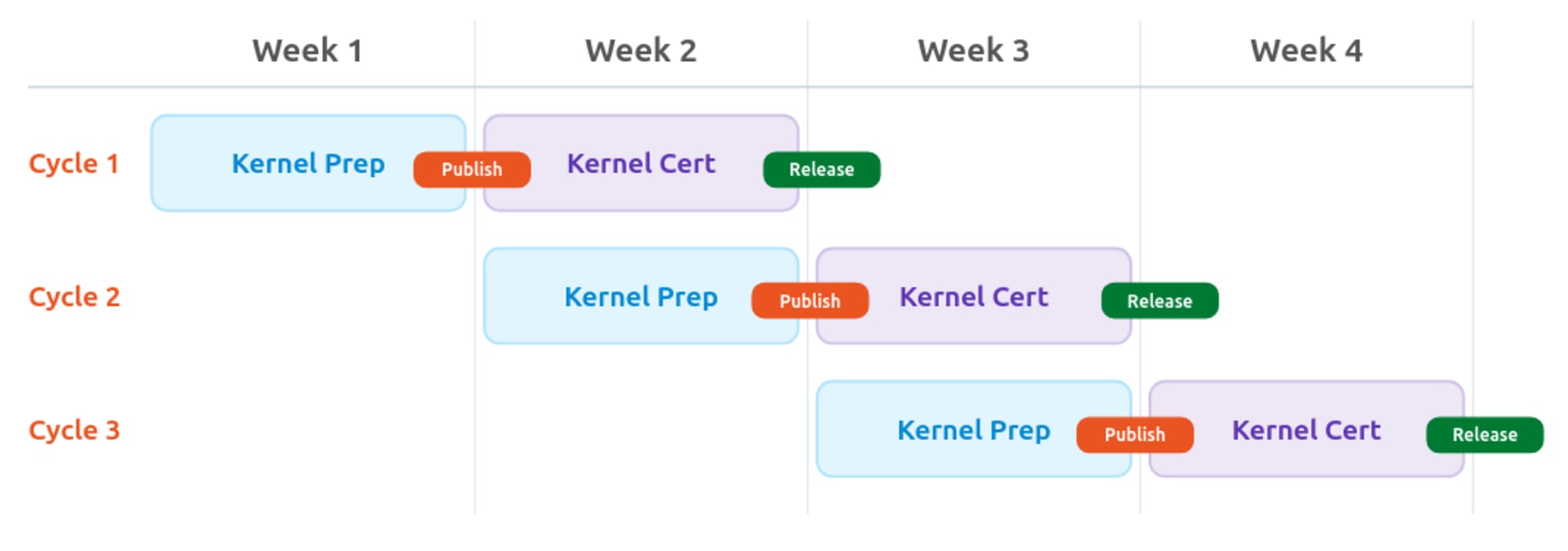
Thus, new versions of kernel packages will now be published once a week, and the maximum delay in eliminating dangerous vulnerabilities will not exceed two weeks. For users who want to install vulnerability fixes as soon as possible and are ready to use a package that has not passed all stages of testing, a week earlier in the repository “proposed” will provide access to pre-release updates.
In addition, within 24-48 hours after the public appearance of information about a vulnerability, Canonical will publish possible workarounds for blocking the vulnerability, and if there are no workarounds, recommend general measures to strengthen protection. Previously, a combined scheme was used in which a regular update of kernel packages was published once every 4 weeks, and two weeks after the start of the cycle of creating the next regular update, an update was published separately, including fixes for only dangerous vulnerabilities and important problems.