Google has published the release of the web browser Chrome 148. At the same time, a stable release of the free project Chromium, which serves as the basis of Chrome, is available. The Chrome browser differs from Chromium in the use of Google logos, the presence of a system for sending notifications in case of a crash, modules for playing copy-protected video content (DRM), an automatic update installation system, the constant inclusion of Sandbox isolation, supplying keys to the Google API and passing RLZ parameters during searches. For those who need more time to update, the Extended Stable branch is separately supported, followed by 8 weeks. The next release of Chrome 149 is scheduled for June 2.
Major changes in Chrome 148 (1, 2,3, 4):
- The development of the AI mode has continued, allowing you to interact with the AI agent from the address bar or from the page shown when opening a new tab. AI mode makes it possible to ask complex questions in natural language and receive answers based on aggregating information from the most relevant pages on a given topic. If necessary, the user can clarify the information with leading questions. The mode also allows you to ask questions about the content of the page directly from the address bar. Chrome 148 includes support for using AI mode to autofill credit card numbers and addresses (with user permission). The ability to use the built-in Gemini chatbot has been expanded to 49 countries from the Asia-Pacific region.
- Added the ability to autofill driver’s license numbers, passports, national ID cards, KTN numbers (Known Traveler Number) and RCN numbers in web forms (Redress Control Number) saved in Google Wallet.
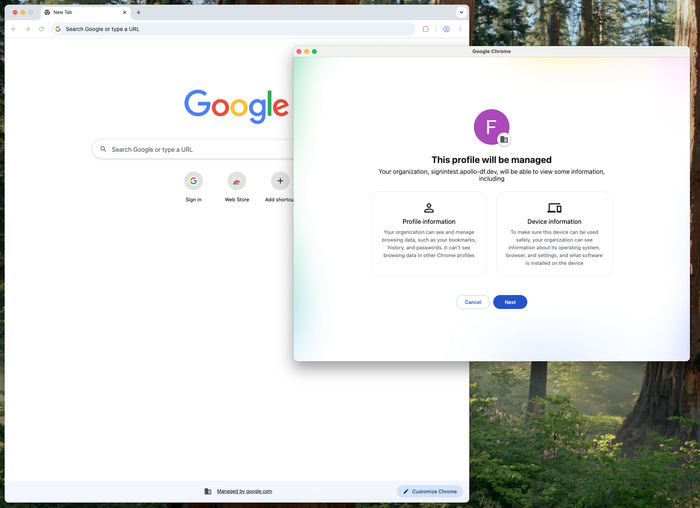
- The visual design of the interface for creating profiles has been changed (the functionality remains the same).

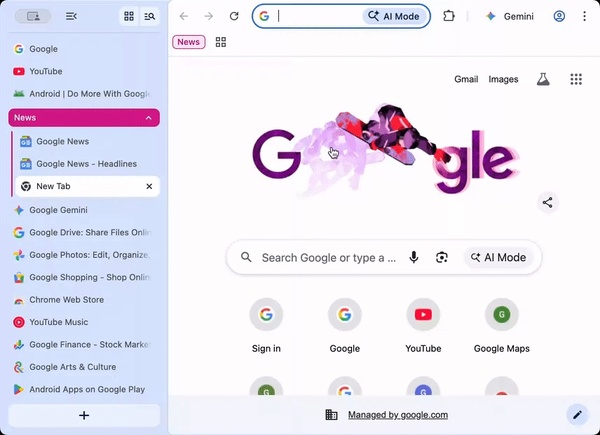
- For ChromeOS, a vertical tab display mode has been implemented, replacing the top horizontal panel with tab buttons with a sidebar with vertical tabs. In the last release, this mode was offered for Linux, macOS and Windows platforms.
/Reports, release notes, official announcements.