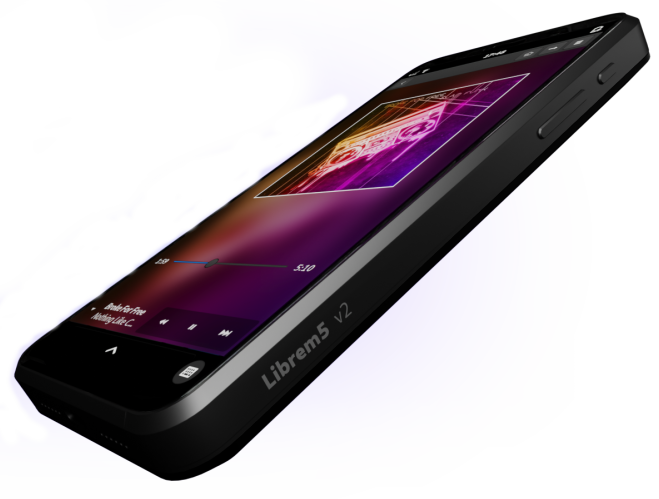
Purism announced the second version of the Librem 5 smartphone, produced since 2020 and aimed at giving the user full control over the device. The new version is notable for its transition to the SoC SpacemiT K1 with an 8-core processor with RISC-V architecture (Librem 5 came with the i.MX8M SoC based on the ARM64 architecture). Librem 5 v2 will be equipped with open firmware and the Linux distribution PureOS, recognized by the Free Software Foundation as completely free. The user environment is built on the Phosh shell developed by the project, based on GNOME technologies and the GTK library.
To block attempts to track and collect information about the user, the device has hardware switches that, at the circuit breaking level, allow you to disable the camera, microphone, GPS, Wi-Fi/Bluetooth and the Baseband module. In addition, the Wi-Fi/Bluetooth chip and the Baseband module for connecting to a cellular network are implemented in the form of removable cards. They intend to raise funds for development and production through crowdfunding. The device will cost $1,599, and first deliveries are scheduled for May 2028. Delivery of the development kit (DevKit) is expected 6-7 months after completion
crowdfunding campaign.
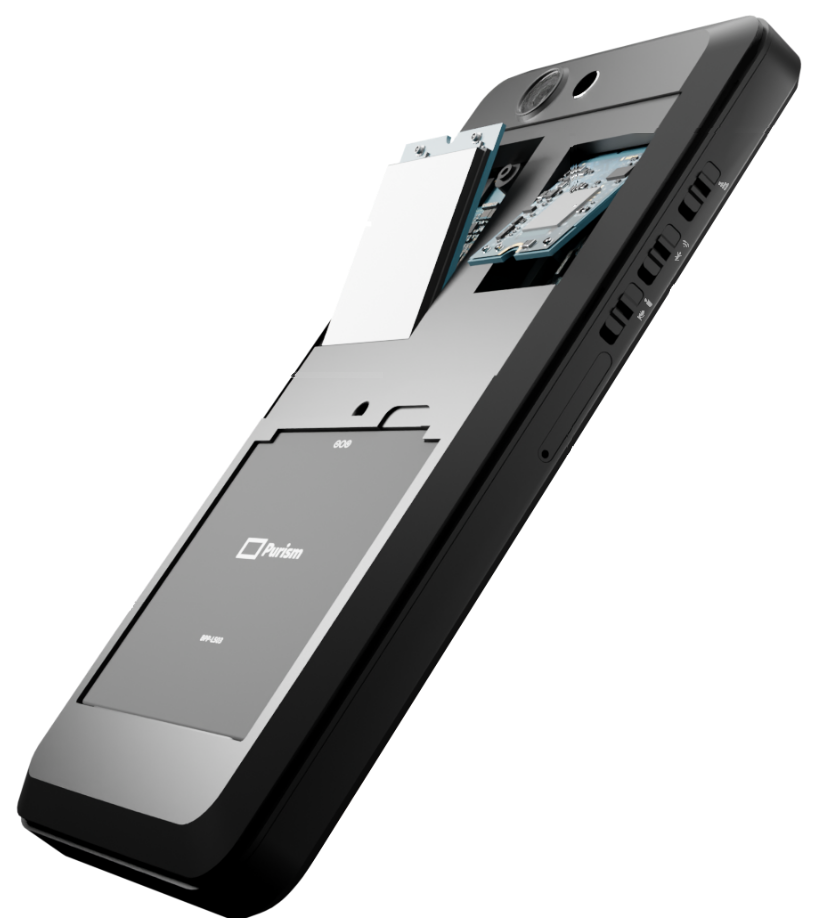
The device will be equipped with a replaceable battery (4500mAh), two SIM cards, connectors for SD cards and headphones. At the same time, the Librem 5 v2 will use the same modular body, cameras (8 and 13 megapixels) and a 5.7-inch screen (720 x 1440) as the Librem 5 model. The size of RAM will increase from 3 to 8 GB, and Flash memory from 32 to 128 GB. There are plans to develop plug-in modules with a 5G modem and NFC.
To run applications previously compiled for Librem 5, an emulator will be offered that allows you to run ARM64 programs in a RISC-V environment. Waydroid is planned to be used to launch Android applications. It is possible to load arbitrary OS from an SD card. To unify the operation of applications on smartphones and PCs, the libhandy and Libadwaita libraries based on GNOME technologies are used. By connecting a smartphone to the monitor, you can get a standard GNOME desktop with the same set of applications.
Support for fingerprint scanners and authentication through facial recognition will not be added in principle, since judicial practice in the United States allows for the forced use of biometrics, but requires explicit consent for unlocking using a password.