Google presented the second quarterly release of the open mobile platform Android 16 (QPR2). The source code associated with the new release is located in the Git repository of the project (branch android-16.0.0_r4). Firmware builds prepared for Pixel 6/6a/6 Pro, Pixel 7/7a/7 Pro, Pixel 8/8a/8 Pro, Pixel 9/9a/9 Pro/9 Pro XL/9 Pro Fold, Pixel Fold and Pixel Tablet devices. In the coming months, firmware with a new version is expected for smartphones Samsung, Honor, iQOO, Lenovo, Motorola, Nothing, OnePlus, Oppo, realme, Sharp, Sony, Tecno, vivo and Xiaomi. Additionally, generated universal GSI (Generic System Images) assemblies will be created, suitable for different devices based on ARM64 and x86_64 architectures.
The release of Android 16 QPR2 is formed within the framework of a new development schedule, according to which not one significant Android release is formed every year, but two releases – the first in the second quarter (QPR1), and the second in the fourth quarter (QPR2). The summer release included significant innovations, behavior changes in the SDK and new APIs. The winter release contains improvements, new APIs and changes that do not affect compatibility with applications.
Main innovations Android 16 QPR2:
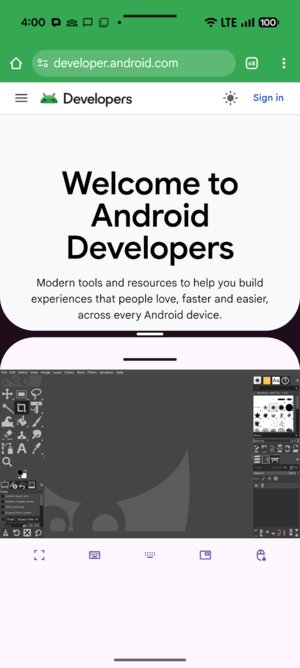
- Added the ability to run graphical applications compiled for Linux. The launch is carried out through the Linux Terminal application, which allows you to launch a virtual machine with Debian GNU/Linux in the Android environment, in which you can run regular Linux applications. To launch the graphical environment, a “Display” button has been added to the Linux Terminal application, which enables graphics redirection through components in the main Android environment. After activating the “Display” button in the terminal, you can launch the Weston composite server, which provides a minimalistic window session, and then use it to launch any graphics applications, for example, launching the graphics editor GIMP was demonstrated.

The functionality of a virtual machine with Linux is being developed within the framework of the project Ferrochrome